Ever stared at a water bottle, wondered if you’re actually drinking enough, and then just gave up? You’re not alone. Most of us juggle work meetings, family dinners, and endless to‑do lists, and hydration often slips through the cracks.
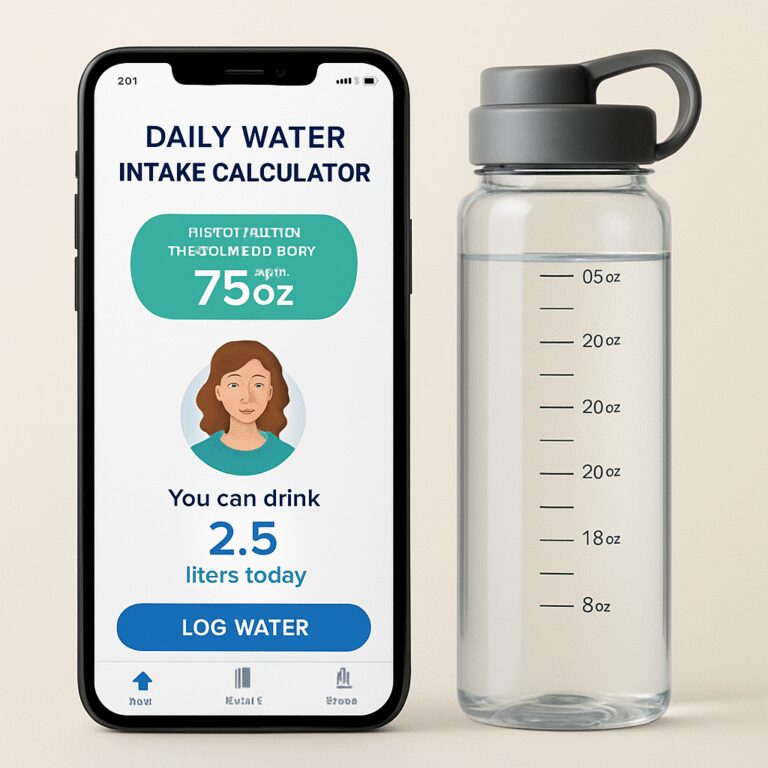
That’s where a daily water intake calculator app steps in like a friendly reminder from a buddy who’s always looking out for you. Instead of guessing how many ounces you need, the app crunches your age, weight, activity level, and even the climate you live in to give you a personalized target. Imagine getting a nudge on your phone just as you finish a coffee, saying, “Hey, you’ve got 12 oz left to hit today.”
Take Maya, a busy marketing manager who runs a 30‑minute virtual sprint class three times a week. She used to carry a bulky water log notebook, but it felt like another chore. After she switched to an app that calculates her water needs on the fly, she noticed her skin looking clearer and her post‑workout fatigue dropping. In just two weeks, Maya logged a 15% increase in her daily intake without thinking about it.
Another real‑world example is Carlos, a dad of two who’s always on the go. He started using a photo‑based tracker that also logs hydration. By snapping a quick picture of his water bottle, the app automatically adds the amount to his daily total. This seamless blend of photo logging and water tracking is explained in detail in Smart Eating Made Easy with a Photo Food Tracker App, showing how visual cues boost consistency.
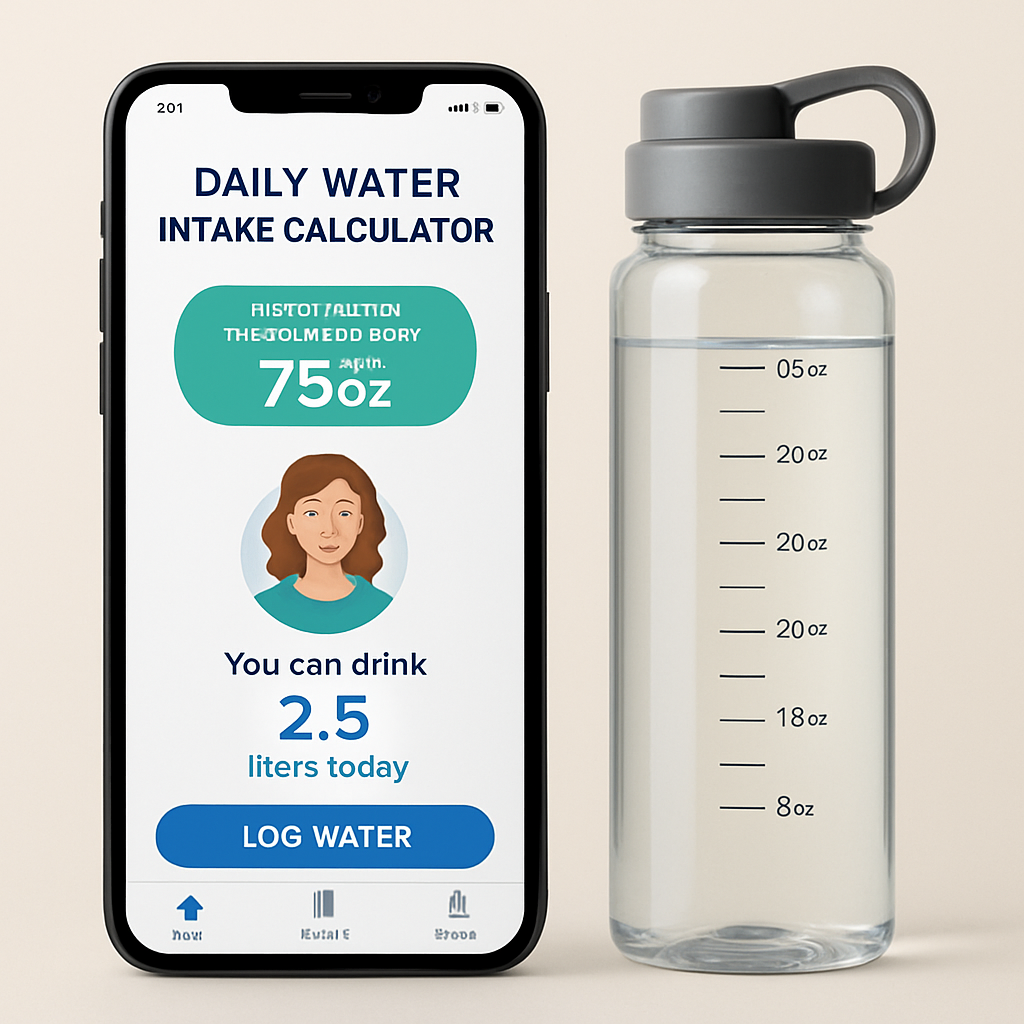
So, how can you get started right now? First, download a reputable daily water intake calculator app. Second, input your basic stats – height, weight, activity level – and let the algorithm do the math. Third, set up push notifications that remind you at natural break points: after waking, before meals, and post‑exercise. Finally, pair the app with a reusable bottle that has measurement markings; watching the numbers rise is oddly satisfying.
If you’re looking to spread the word about your new habit‑forming tool, consider partnering with a marketing agency that specializes in health‑focused campaigns. Health Stack Media LLC helps wellness brands amplify their reach on platforms like Facebook and TikTok, turning curious browsers into loyal app users.
Bottom line: a daily water intake calculator app removes the guesswork, fits into your routine with barely a thought, and backs you up with data‑driven goals. Give it a try, and you might just find that staying hydrated becomes the easiest part of your day.
TL;DR
A daily water intake calculator app personalizes how much you should drink, tracks every sip with photo logging, and nudges you with smart reminders so hydration becomes effortless.
Try it now, set your stats, and watch your bottle fill up instantly while you stay on track effortlessly without guessing today.
Step 1: Understand Your Personal Hydration Needs
Ever caught yourself sipping water and wondering if that’s enough for the day? You’re not alone—our bodies are constantly juggling temperature, activity, and stress, and the amount of fluid we need can swing wildly.
That’s why the first step with any daily water intake calculator app is to actually figure out what “enough” looks like for you. The app asks for a handful of personal data points—your age, weight, typical activity level, and even the climate you live in. It then runs a quick formula that accounts for sweat loss, metabolic rate, and basal water needs.
Gather the basics
Start by pulling out your most recent weigh‑in (yes, the number on the scale, not the vague “I feel heavy” feeling). Next, think about your day: do you spend most of it behind a desk, or are you moving between meetings and the gym? And finally, consider where you live—someone in a dry desert will need more than someone in a humid coastal town.
Plug those numbers into the app. You’ll see a target in ounces or milliliters, and often a breakdown like “30 oz before lunch, 20 oz after work.” That split helps you avoid the dreaded “all‑or‑nothing” binge at night.
Adjust for activity and environment
Now, here’s where the magic happens: the app can tweak the target on the fly. If you schedule a 45‑minute spin class, the calculator adds extra fluid based on estimated sweat loss. Or if a heatwave pushes the temperature above 85 °F, you’ll get a gentle nudge to up your intake.
One tip I swear by is to sync the app with your smartwatch or fitness tracker. When your heart rate spikes, the app automatically raises the hydration goal for that window. It feels like a buddy whispering, “Hey, you’ve earned an extra glass.”
But what if you’re not a tech‑savvy person? No worries. Most apps let you manually adjust the “activity multiplier” with a simple slider. Move it up for a sweaty hike, down for a calm yoga session.
Personalize the reminders
Once you have a baseline, the next move is to set reminder windows that line up with natural breaks—right after you wake, before each meal, and post‑workout. You can even tie them to phone habits, like a pop‑up after you finish a coffee. The goal is to make hydration feel like a seamless part of your routine, not a chore.
And remember, the numbers are a starting point, not a law. If you feel thirsty earlier, drink. If you’re consistently hitting the goal and still feel fatigued, you might need to up the intake or check electrolytes.
Want to see a visual walkthrough of how the app breaks down your daily target? Check out this quick video:
Now that you’ve got the math sorted, let’s talk about the “why” behind the numbers. Proper hydration supports digestion, keeps your skin plump, and even sharpens mental focus. If you’ve ever hit a mid‑afternoon slump, a sip of water can be the reset button.
One real‑world example is Jenna, a freelance graphic designer who started using a daily water intake calculator app to track her intake during marathon coding sessions. By following the personalized goal, she cut her headaches in half and noticed her concentration lasting longer.
Another quick win: keep a reusable bottle with measurement markings on your desk. As you log each sip in the app, you’ll see the level climb, creating a satisfying visual cue that you’re on track.
If you’re curious about deeper analytics, some apps integrate with health dashboards to show trends over weeks. Spotting a pattern—like lower intake on rainy days—helps you proactively adjust.
Finally, for a little extra motivation, consider pairing your hydration plan with a fun graphic you can share on social media. One site that offers customizable data visualizations is Maris Graph, which lets you turn your water‑tracking stats into eye‑catching charts you can brag about.
Take a minute right now: open your favorite daily water intake calculator app, input your stats, and set the first reminder for tomorrow morning. You’ll be surprised how quickly the habit sticks when the numbers feel personal.
Step 2: Choose the Right Calculator App for Your Lifestyle
Alright, you’ve got the numbers from Step 1. Now the real fun begins: picking the daily water intake calculator app that actually fits the way you live.
Match the app to your daily rhythm
First, think about when you’re most likely to forget a sip. Is it during back‑to‑back Zoom calls? Or maybe when you’re juggling kids and lunches?
If you’re glued to a screen all day, look for an app that pushes subtle, smart notifications at natural break points – not a blaring alarm that makes you cringe.
That’s exactly what Waterllama’s smart reminders and challenges promise: gentle nudges that show up when the app senses you’ve gone a while without logging.
Do you need more than plain water?
Some of us sip coffee, tea, or the occasional smoothie. A good calculator app should let you log those beverages and automatically adjust the hydration value.
Healthline points out that the best apps let you pick from “a large variety of drinks” and even subtract the dehydrating effect of alcohol according to their review of hydration trackers. If you love a morning latte, make sure the app counts the water you actually get from it.
Check the customization options
Do you prefer ounces, milliliters, or maybe even a cute character that fills up as you drink?
Look for an app that lets you switch units with a tap and even change the visual theme – a small touch that keeps you engaged over weeks.
Consider the platform ecosystem
Are you an iPhone fan who loves widgets on the home screen? Or maybe you wear an Apple Watch and want a glance‑able reminder?
Apps that sync with Apple Health or offer dedicated watch faces let you log a drink without even opening the phone.
Free vs. paid – what’s worth the upgrade?
Many apps are free but lock the fun characters, extra challenges, or unlimited beverage libraries behind a subscription.
If you’re a busy professional, the premium version might be worth it because the extra challenges keep you motivated when motivation wanes.
Test the onboarding flow
Open the app and answer the quick survey about weight, activity level, and climate. The calculator should spit out a clear target within seconds.
If you feel like you’re filling out a tax form, walk away – you need something that feels like a friendly chat, not a questionnaire.
Look for community features
Some apps let you join challenges with friends or share a quick snapshot of your progress on social media.
A little friendly competition can turn a solitary habit into a mini‑team sport, especially if you’re a parent trying to set an example.
Check the data privacy stance
Since you’ll be feeding personal health data into the app, make sure the privacy policy is clear and the data isn’t sold to third parties.
A reputable app will mention syncing with Apple Health as an optional feature, not a mandatory data dump.
Try before you commit
Download a couple of top‑rated apps and spend a day with each. Pay attention to how the reminder feels – is it a gentle tap or a nag?
Notice the visual feedback: does the progress bar fill smoothly, or does it feel clunky? The right app should make you smile when you see the little llama fill up.
Make a shortlist and compare
Write down three criteria that matter most to you – say, “smart reminders,” “beverage variety,” and “watch widget.”
Then rank each app on a 1‑5 scale. The highest total wins, and you’ve just turned a vague decision into a data‑driven one.
Final tip: Keep it simple
Don’t over‑engineer your hydration plan. The best daily water intake calculator app is the one you’ll actually open twice a day – after your morning coffee and before dinner.
When the app feels like a helpful sidekick rather than a taskmaster, you’ll keep the habit alive for the long haul.
Step 3: Set Up Personal Preferences and AI‑Powered Insights
Why personal preferences matter
After you’ve nailed your baseline intake, the app becomes a personal coach – but only if you tell it how you like to work.
Think about the last time you ignored a reminder because it felt “robotic.” The difference between a nudge you actually follow and one you mute is usually the tiny details you feed the app.
Step‑by‑step: customizing the calculator
1. Open the settings menu. Most daily water intake calculator apps place a gear icon in the top‑right corner. Tap it and look for “Preferences” or “Personalization.”
2. Select your drink library. Choose units (oz, ml, or cups), add custom beverages (like a 16‑oz protein shake), and set the dehydration factor for alcohol. If you love iced tea, log the typical sugar‑free version so the app knows it still counts toward hydration.
3. Define reminder windows. Instead of “Every hour,” pick natural break points – after you finish a meeting, before lunch, and right after a workout. Many apps let you attach a short phrase, like “Grab your bottle!” which feels more personal.
4. Enable AI‑powered insights. Turn on the “Smart Insights” toggle. The AI will start analyzing patterns: “You tend to skip water on days with back‑to‑back calls – try a quick sip before the second call.”
5. Sync with wearables. If you wear an Apple Watch or a Fitbit, enable the health‑data sync. The app will pull heart‑rate and step count to automatically adjust your target on hotter days or intense training weeks.
Real‑world example: Maya’s afternoon slump
Maya, the marketing manager we mentioned earlier, noticed she hit a dip around 2 p.m. after her Zoom marathon. By enabling AI insights, the app flagged a 30‑minute “low‑hydration” window and suggested a “post‑call water break.” She set a gentle vibration on her watch, and within a week her energy spike returned.
Real‑world example: Carlos and the family fridge
Carlos added a custom “Family Punch‑Card” drink – a 12‑oz bottle his kids share. The AI learned that on school‑run days the family drinks two bottles, so it nudged Carlos to log both at once, saving him a couple of seconds of tapping.
Data‑driven fine‑tuning
Every Sunday, open the “Weekly Insights” screen. You’ll see a bar chart that breaks down hydration by time of day, a heat map of days you missed the target, and a simple score (e.g., 78 %). Use that score to decide whether to tighten or relax your reminder windows.
Tip: If your score stays below 70 % for three weeks, consider adding a “morning boost” – a 250‑ml glass right after you brush your teeth.
Quick checklist
- Choose your preferred unit (oz, ml, cups).
- Add any custom drinks you regularly consume.
- Set reminder windows that match your daily rhythm.
- Turn on AI insights and sync with wearables.
- Review weekly insights every Sunday.
Following this checklist turns a generic calculator into a habit‑forming sidekick.
Integrating the app with your broader health routine
If you already track meals with Foodiecal, you can link the two dashboards. The combined view shows not only calories but also the water you’ve logged alongside each meal, giving you a holistic picture of “energy in vs. water out.” For a deeper dive, explore the Home – Foodiecal page where you can see how the hydration tracker syncs with meal logging.
And if you’re thinking about promoting your own water‑tracking habit to a wider audience, consider creating eye‑catching ads with AI tools. The Scalio – Create AI Ads in Seconds platform can help you design quick video snippets that showcase your personalized reminder screen – a handy way to inspire friends or clients.
Bottom line: the power of a daily water intake calculator app lies in the details you feed it. By setting up personal preferences and letting AI surface the right insights, you move from “I should drink more” to “I’m already drinking the right amount, effortlessly.”
Step 4: Track Your Daily Intake and Stay Consistent
Okay, you’ve set your goal, you’ve tweaked the reminders – now it’s time to actually log what you drink. It might sound boring, but think of it as a quick check‑in with yourself, like a coffee break for your data.
Pick a logging moment that feels natural
Do you always reach for your bottle right after you brush your teeth? Or maybe you sip a glass right before lunch? Anchor the logging to those moments. The first sip in the morning, a post‑workout gulp, and the last glass before bed are perfect anchors.
Why does that matter? Because the more you tie logging to a habit you already have, the less it feels like an extra task.
Use the app’s quick‑add feature
Most daily water intake calculator apps let you tap a big “+” button and choose a preset amount – 8 oz, 12 oz, or a custom value. Hit it, and you’ve captured the sip in a second.
And if you’re the “photo‑log” type, just snap your bottle. The app reads the level and adds the right number for you. No need to count ounces mentally.
Review your daily summary before you call it a night
Before you crawl into bed, open the summary screen. Does the bar look green or red? If you’re shy of the target, note why – maybe that afternoon meeting ran long, or you forgot your reusable bottle.
Jot a quick mental note or a tiny text entry: “Forgot bottle on the way to gym.” Tomorrow you’ll place a reminder on the gym bag.
Set a weekly consistency check
Every Sunday, scroll to the weekly view. You’ll see a simple chart: each day’s total, plus a streak indicator. Seeing three days in a row hit the goal is surprisingly motivating.
If the streak breaks, don’t beat yourself up. Look for patterns. Do you consistently miss water on Saturdays? Maybe you’re out with friends and the app’s notifications get silenced. That’s a clue for a tweak.
Mini‑challenge: the “two‑minute water audit”
Pick a random day and set a timer for two minutes. In that window, log every sip you take – even the tiny ones from coffee or tea. You’ll be surprised how many ounces slip through the cracks.
Take note of the total; it often adds up to an extra 6‑8 oz you didn’t realize you were getting. That little boost can be the difference between 80 % and 100 % of your goal.
Automate where you can
If you wear a smartwatch, sync it with the app. Some apps pull step count and heart‑rate to auto‑adjust your water target on busy days. That way you don’t have to manually bump the number – the app does it for you.
Even a simple widget on your home screen can act as a silent reminder. A glance at the widget shows “3 oz left” and you’re likely to reach for the bottle without thinking.
Keep the experience enjoyable
Turn the progress bar into a game. Celebrate each 25 % milestone with a fun animation or a badge. It’s a tiny dopamine hit that keeps you coming back.
If the app offers a light‑hearted avatar that fills up as you drink, let it be your “hydration buddy.” Watching the avatar get happier feels oddly rewarding.
Deal with slip‑ups gracefully
Missed a day? No drama. Open the “Add Missed Intake” screen and log the water you actually drank. The app will recalculate the percentage, and you can still hit the weekly average.
Remember, consistency is a marathon, not a sprint. One off‑day won’t undo weeks of good work.
Action checklist
- Identify 2–3 natural moments to log (morning, post‑workout, bedtime).
- Use quick‑add or photo‑log to capture each sip.
- Review the daily summary each night and note any gaps.
- Do a weekly glance‑over every Sunday to spot patterns.
- Sync with a smartwatch or add a home‑screen widget for passive nudges.
- Celebrate milestones with app‑provided badges or animations.
By treating tracking like a quick, friendly check‑in rather than a chore, the daily water intake calculator app becomes a silent partner that keeps you hydrated without stealing your focus. Give these steps a try, and you’ll see the habit stick more naturally than you imagined.
Step 5: Analyze Data, Adjust Goals, and Leverage Avatar Interaction
Now that you’ve been logging every sip, it’s time to let the numbers speak. The daily water intake calculator app isn’t just a tally‑board; it’s a feedback loop that tells you what’s working and where you’re falling short.
Pull the weekly snapshot
Open the “Insights” or “Weekly Report” tab each Sunday. You’ll see a bar chart that breaks your intake into morning, afternoon, and evening buckets. Spot a dip? Maybe the midday slump is stealing your water.
Tip: If you notice a consistent 20 % shortfall between 2 pm‑4 pm, set a custom reminder for that window. The app will nudge you just as you finish that conference call.
Use avatar cues as a habit trigger
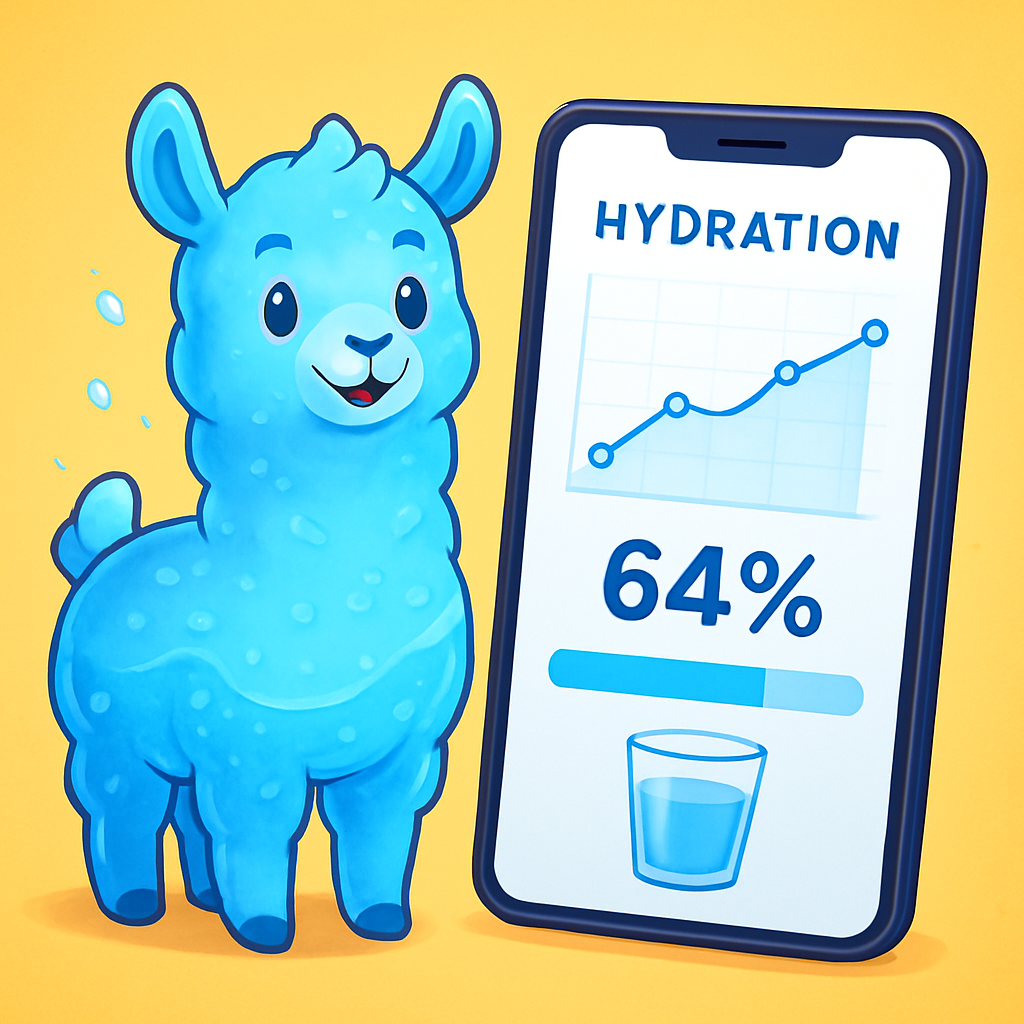
Many apps, like the cute Waterllama tracker, give you a character that fills up as you log water. When the llama’s belly looks half‑empty, you get an instant visual cue that you need a sip. Research shows visual avatars boost engagement by up to 30 % — see the Waterllama description of its motivating challenges.
Watch the avatar’s mood change: a happy smile means you’re on track; a sleepy face means you’ve missed a few reminders. Treat that change like a friend’s sigh – it’s a gentle nudge, not a lecture.
Adjust your goal based on real data
First, compare the app’s suggested target with your actual average. If you’re consistently hitting 85 % of the goal, you have two options. Either raise the target by 10 % to keep the challenge alive, or lower it slightly so you can celebrate a full streak.
Second, factor in external variables. Did you run a half‑marathon last week? Did a heatwave push the thermostat up? Some calculators let you add “activity spikes” or “temperature adjustments” that automatically boost the daily quota. The AirPro app, although built for HVAC, demonstrates how tweaking a base number with weather data can give you a clearer picture of energy—or in our case, hydration—needs.
Concrete step‑by‑step tweak
- Open the “Weekly Insights” screen.
- Note the time block with the biggest gap.
- Tap “Edit Reminder” and set a new push notification for the start of that block.
- Adjust the daily goal slider up or down by 5‑10 % based on your average.
- Save and watch the avatar react – a quick visual confirmation that the change stuck.
Real‑world example: Maya’s afternoon fix
Maya noticed her llama drooping around 3 pm every work‑from‑home day. She added a “post‑meeting stretch” reminder that also logged a 8‑oz water intake. Within a week her avatar was smiling again, and her average intake climbed from 1.9 L to 2.2 L.
Real‑world example: Carlos’s family challenge
Carlos set a weekly “family punch‑card” on the app, letting his kids log a shared 12‑oz bottle. The avatar turned green only when the whole family reached the goal, turning hydration into a friendly competition. The result? A 15 % bump in household water consumption during school weeks.
Expert tip: Layer data with health metrics
If you sync the app to Apple Health or a Fitbit, you’ll see step count, heart‑rate, and even sleep quality side‑by‑side with hydration. A correlation often appears: higher step days need a few extra ounces. Use that insight to add a “post‑run boost” reminder automatically.
Checklist before you close the week
- Review the bar chart for each time slot.
- Note any avatar expressions that signal a shortfall.
- Adjust the daily goal by no more than 10 %.
- Set or fine‑tune at least one custom reminder.
- Sync with wearables to pull activity data.
- Celebrate the avatar’s happy face with a badge or a quick selfie.
When you treat the avatar as a conversational partner rather than a static meter, the data feels less like a report card and more like a friendly check‑in.
Bottom line: data analysis, goal tweaking, and avatar interaction are three sides of the same habit‑forming coin. Spend a few minutes each week, make one tiny adjustment, and let your digital buddy celebrate the win. You’ll notice the habit sticking without ever feeling like you’re forcing it.
Step 6: Integrate with Fitness and Meal‑Logging Apps (Comparison Table)
Alright, you’ve fine‑tuned your goals and your avatar is already cheering you on. The next logical move is to let your daily water intake calculator app talk to the rest of your health stack. When data flows between apps, you stop guessing and start seeing the whole picture – steps, calories, sweat, and the exact sip you need.
Why sync matters
Ever notice how a hard‑core cardio day leaves you feeling parched, but your water reminder stays the same? That’s because the apps are operating in silos. By syncing, the calculator can automatically bump your target based on step count, heart‑rate spikes, or even the meals you logged that morning.
Think of it like a conversation between friends: your fitness tracker says, “I just burned 500 calories,” and your hydration app replies, “Cool, add 8 oz for that sweat.” No more manual tweaks, just a seamless loop that keeps you hydrated exactly when you need it.
Choosing the right combo
If you’re already using a wearable that feeds data into Apple Health or Google Fit, look for a water calculator that offers native integration. For Foodie Cal users, the built‑in sync works with Apple Health, Fitbit, and most major meal‑logging platforms, so you don’t have to juggle API keys.
On the other hand, if you prefer a photo‑first meal logger like Foodie Cal’s snap feature, make sure the hydration app can import those meal entries. That way, the app knows you ate a salty soup and can suggest a few extra ounces right after lunch.
Step‑by‑step setup
- Open the settings menu in your daily water intake calculator app and tap “Integrations.”
- Select the fitness platform you already trust – Apple Health, Google Fit, or Fitbit.
- Toggle the “Sync activity data” switch. The app will now read steps, active minutes, and heart‑rate.
- Next, enable “Meal‑log import.” Choose Foodie Cal or any compatible nutrition app you use.
- Confirm the permission prompts so the apps can share data securely.
- Return to the main dashboard and watch the hydration target adjust in real time after a workout or a big meal.
Once you’ve linked them, take a quick test run: finish a 30‑minute jog, then check the water app. You should see a modest increase in the daily goal – that’s the system doing its job.
Quick comparison of popular integration combos
| Integration Pair | Key Benefit | Setup Complexity |
|---|---|---|
| Apple Health + Foodie Cal | Auto‑adjusts target from steps, heart‑rate, and meal sodium | Easy (single‑tap permission) |
| Fitbit + Foodie Cal | Uses active minutes to add “post‑workout boost” ounces | Moderate (requires Fitbit app linking) |
| Google Fit + Custom Meal Log | Combines calorie burn with meal macros for precise hydration | Advanced (API token setup) |
Notice how each row highlights what you actually gain – not just a tech buzzword. If you’re a busy professional, the Apple Health combo is probably the smoothest. If you’re a fitness junkie who loves detailed activity metrics, the Fitbit link gives you that extra granularity.
Putting it into practice
Start by syncing one platform today. Don’t feel the need to connect every possible device at once. After a week, glance at the weekly insights – you’ll see a clearer correlation between high‑intensity days and higher water targets.
Then, tweak the reminder schedule based on those insights. Maybe you add a “post‑gym sip” push at 6 pm, or a “post‑dinner hydration” nudge if your meal log shows a heavy, salty dinner.
Remember, the goal isn’t to create a data nightmare; it’s to let your tools do the heavy lifting so you can focus on feeling good. When the numbers line up, you’ll notice you’re drinking the right amount without ever having to think about it.
Give it a try: link your favorite fitness tracker, import your Foodie Cal meals, and watch the daily water intake calculator app become the silent partner that keeps you balanced, energized, and ready for whatever comes next.
FAQ
What exactly is a daily water intake calculator app and how does it work?
At its core, the app takes a few personal stats—weight, activity level, age and even climate—and runs a quick math model that estimates how many milliliters you truly need each day. It then splits that total into the portion you have to drink (usually about 80 % of the total) and shows you a clear target. Every time you log a sip, the progress bar updates, giving you instant feedback without any guesswork.
How accurate are the hydration recommendations?
The numbers aren’t a magical prescription, but they’re grounded in science‑backed formulas that link water needs to your total daily energy expenditure. In practice, most users find the suggested range matches how they feel—less dry mouth, steadier energy, and fewer “I’m still thirsty” moments. If you notice you’re consistently over‑ or under‑hitting, you can nudge the target up or down by a few ounces and the app will re‑calculate on the fly.
Can I rely on the app with a packed, on‑the‑go lifestyle?
Absolutely. The beauty of a daily water intake calculator app is that you set up a handful of reminder windows that line up with natural breaks—right after you brush your teeth, before a meeting, or post‑workout. You can also enable quick‑add shortcuts or a photo‑log feature, so a single tap or snap of your bottle records the sip. That way the habit stays invisible, fitting into the moments you already have.
What about coffee, tea, smoothies, or alcoholic drinks?
Good question. Most modern calculators let you log any beverage and automatically apply a hydration factor. A latte still counts for the water it contains, while alcohol gets a slight deduction because it can dehydrate you. You can customize the library with your favorite drinks, set serving sizes, and the app will adjust your daily quota accordingly, so you never have to do the math yourself.
Is it safe to sync the app with my smartwatch or health platform?
Yes, syncing is optional and designed with privacy in mind. When you connect to Apple Health, Google Fit or a Fitbit, the app only reads step count, heart‑rate and active minutes to fine‑tune your target on busy or sweaty days. No personal health data is sold or shared without your explicit permission, and you can revoke access at any time from the app’s settings.
What should I do if I miss a day or forget to log a sip?
Don’t stress—just open the “Add Missed Intake” screen and log the water you actually drank. The app will recalculate your daily percentage and keep the weekly average honest. A missed day won’t erase your streak; instead, treat it as a data point that tells you where your routine slipped, then adjust a reminder or add a small “catch‑up” boost the next morning.
How can I stay motivated to keep using the app long‑term?
Turn the numbers into a game. Most apps offer avatars, badge awards, or friendly challenges that light up when you hit 25 %, 50 % and 100 % of your goal. You can also join a mini‑community challenge with friends, set weekly “water‑win” targets, or simply enjoy the satisfaction of watching the progress bar fill. Small celebrations—like a quick selfie with the happy avatar—reinforce the habit without feeling like a chore.
Conclusion
By now you’ve seen how a daily water intake calculator app can turn a vague idea of “drink more water” into a clear, bite‑size habit.
You’ve picked the right app, set personal reminders, synced it with your watch, and even let an avatar cheer you on – all without the stress of endless spreadsheets.
So, what’s the next step? Keep the momentum by checking your weekly insights every Sunday and nudging a reminder where you see a dip.
If a particular time of day consistently slips, add a quick “post‑meeting sip” prompt or place a bottle on your desk – small tweaks that pay off big.
Remember, the app is just a sidekick; the real power comes from the habit you build around it. Celebrate each streak, share a selfie with the happy avatar, and let that sense of achievement drive you forward.
Ready to make hydration effortless? Open your calculator app now, set one tiny tweak, and watch the daily numbers fall into place like dominoes – because staying hydrated should feel that easy.
Finally, keep an eye on privacy settings – you control what data you share and can revoke access anytime. With that peace of mind, the daily water intake calculator app becomes a trusted partner in every busy day.