
If you’ve ever stared at a nutrition label, wondering how many carbs actually count toward your diabetes plan, you’re not alone.
Those tiny numbers can feel like a secret code, and missing just one gram might throw off your blood‑sugar balance for the whole day.
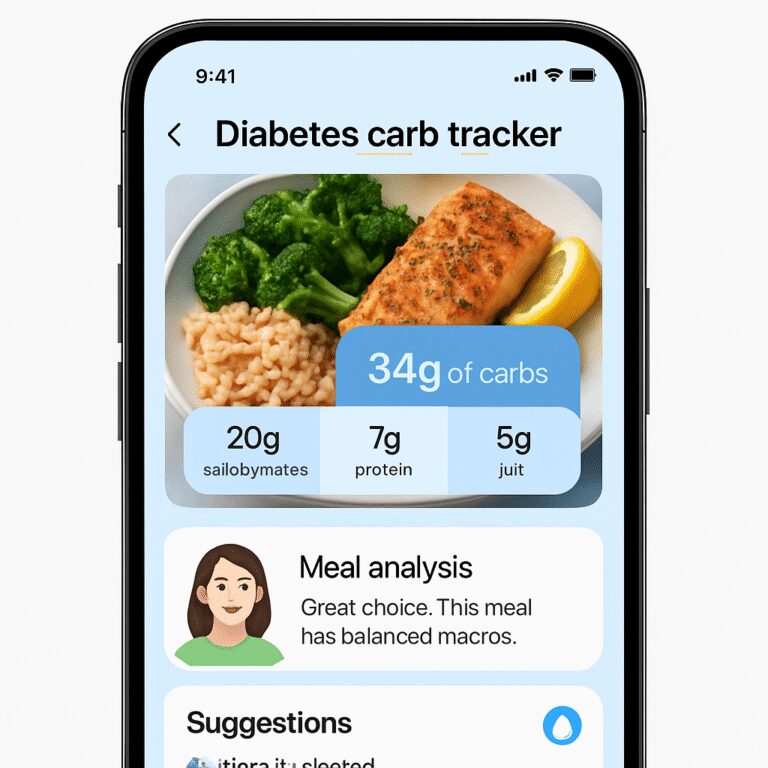
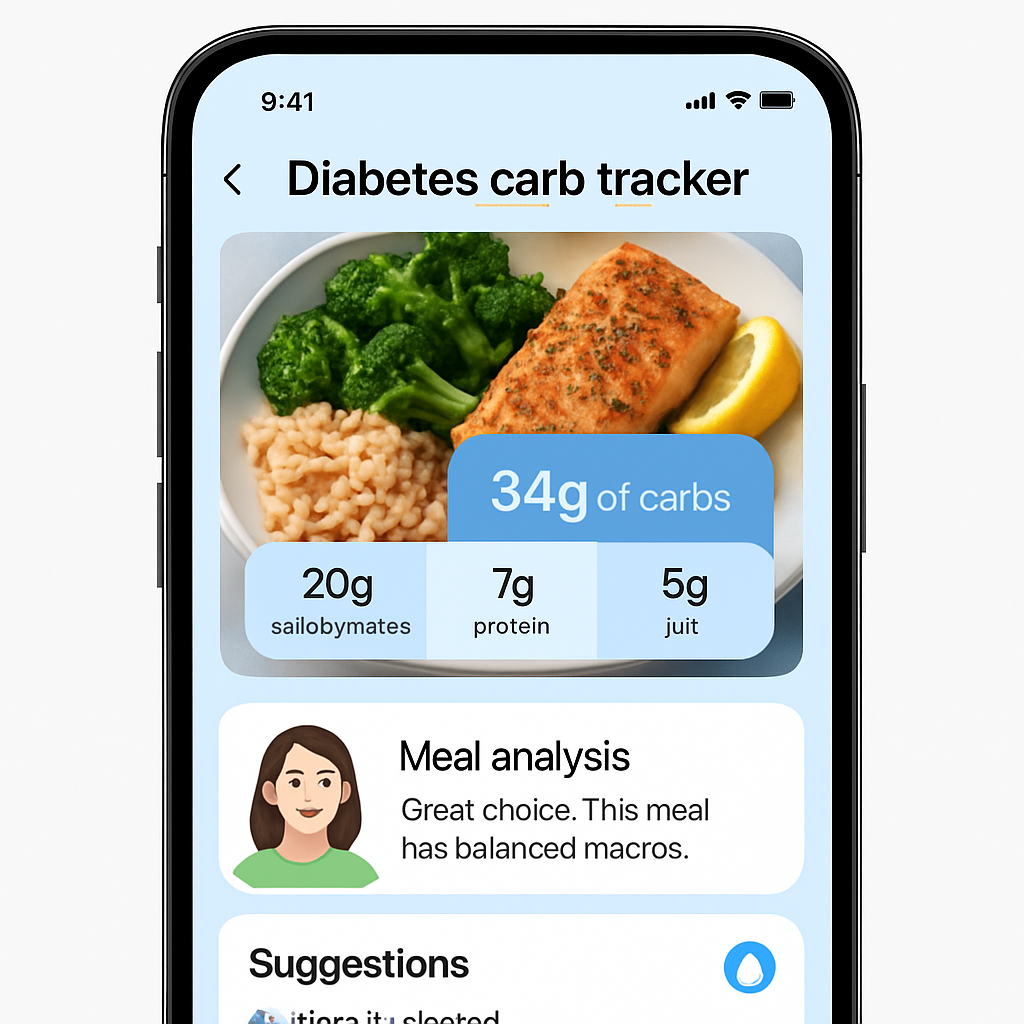
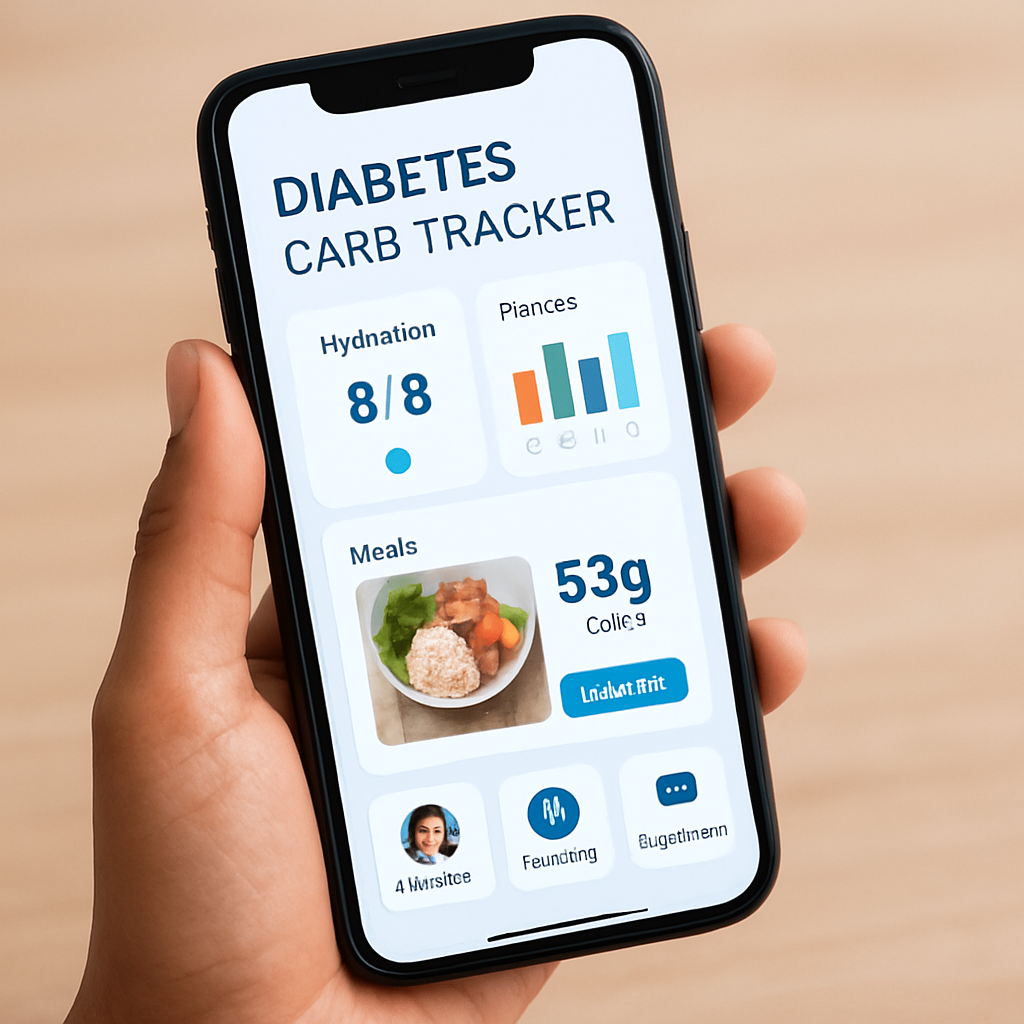
Imagine this: you grab a quick lunch between meetings, snap a photo of your sandwich, and the app instantly tells you the exact carb load, so you can adjust your insulin dose on the fly.
That moment of relief—knowing you’ve got the data right when you need it—is what a reliable diabetes carb tracker app should deliver.
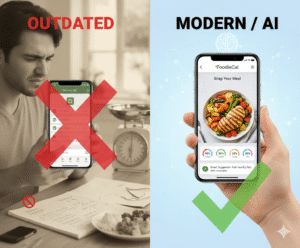
But many apps either drown you in manual entry or give vague estimates that leave you guessing.
Here’s a real‑world example: Sarah, a busy marketing director, used to write down every bite in a notebook, which took 15 minutes after each meal. After switching to a photo‑based tracker, she cut logging time to under 30 seconds and saw her HbA1c drop by 0.3% in three months.
Another case: Carlos, a freelance designer, struggled with late‑night snacks. The app’s carb alerts nudged him before he reached for a cookie, helping him stay within his daily target without feeling deprived.
So, what should you look for? First, instant carb recognition via photo capture. Second, AI‑driven suggestions that factor in your personal insulin-to-carb ratio. Third, seamless integration with your glucometer or health‑app ecosystem.
To get the most out of such a tool, follow these three steps: (1) set your personalized carb budget based on your doctor’s advice; (2) snap every meal, even the “quick bites,” and trust the AI to break down carbs, fiber, and net carbs; (3) review the daily summary each evening and adjust your next day’s plan accordingly.
Want to see how a photo‑focused tracker can simplify your routine? Check out Smart Eating Made Easy with a Photo Food Tracker App for a walkthrough that shows exactly how the process works.
Beyond carbs, many people with diabetes explore complementary wellness options. For instance, CBD products are gaining attention for helping manage stress and inflammation, which can indirectly support blood‑sugar stability.
Learn more about those options at Iguana Smoke’s CBD wellness collection, a resource that many health‑focused users find useful.
Ready to take control? Grab your phone, download a trusted diabetes carb tracker app, and start logging with confidence today.
TL;DR
A diabetes carb tracker app lets you snap meals, instantly see carbs, fiber and net carbs, and adjust insulin on the fly, turning guesswork into confident control.
Use the three‑step routine—set your carb budget, log every bite with a photo, review nightly summaries—to stay within targets, reduce stress, and keep your blood‑sugar steady.
Step 1: Set Up Your Diabetes Carb Tracker App
Okay, let’s be honest – the thought of adding another app to your phone can feel like adding another chore to an already‑busy day. But imagine opening the app and instantly seeing the carbs, fiber, and net carbs for the lunch you just snapped. That moment of “ah, I’ve got this” is exactly why we’re walking through the setup together.
First things first, download the app you’ve decided on. When you launch it, you’ll be greeted with a quick welcome screen that asks a few key questions. This isn’t just fluff; it’s how the platform learns your personal carb budget, your insulin‑to‑carb ratio, and any dietary preferences you have (like low‑glycemic or keto‑friendly foods). Take a minute to be as accurate as possible – the more the app knows, the smarter its suggestions become.
Next, create your profile. Use a strong but memorable password, and enable two‑factor authentication if the app offers it. Trust me, you’ll thank yourself later when you’re not locked out during a mid‑day snack emergency.
Now comes the fun part: set your daily carb budget. Pull out the number your doctor gave you – maybe 150 grams, maybe 180 – and type it in. If you’re not sure, most apps let you start with a default and tweak it later based on your blood‑sugar trends.
Once your budget is in place, head to the photo‑capture settings. Turn on the camera shortcut so you can snap a meal with a single tap. Many apps even let you add a quick note like “post‑workout shake” or “birthday cake” for later reference. Here’s where the Smart Eating Made Easy with a Photo Food Tracker App guide can give you a visual walk‑through of the snapping process.
If you already use a glucometer or a wearable, look for the integration tab. Syncing the two devices means your blood‑sugar readings will automatically appear next to each meal log, saving you the hassle of manual entry. Most integrations are a simple “Connect” button followed by a permission prompt – nothing more complicated than linking your email.
Ready to see it in action? Below is a quick demo that shows how a photo is turned into a carb breakdown in seconds.
After the video, take a moment to try a test snap with a snack you have at hand – maybe a handful of grapes or a granola bar. Notice how the app instantly lists total carbs, fiber, and net carbs. If something looks off, you can tap “Edit” and fine‑tune the numbers before the app saves the entry.
Fine‑tuning doesn’t stop at carbs. Most apps let you set alerts for when you’re approaching 80 % of your daily budget, or when your blood‑sugar spikes above a threshold. Turn those alerts on, and you’ll get a gentle push notification – no more staring at a blank screen wondering if you’ve over‑indulged.
While the app handles the numbers, many people with diabetes also look for ways to manage stress and inflammation, which can affect glucose levels. That’s why some turn to natural supplements like CBD. If you’re curious, check out Iguana Smoke’s CBD wellness products – they’re popular among health‑focused folks who want a calm, balanced day.
Final tip: spend a few minutes each weekend reviewing your weekly summary. Spot patterns – maybe you consistently go over carbs on Friday nights or under‑track breakfast. Adjust your budget or meal‑prep strategy accordingly, and you’ll keep that carb curve flat instead of spiking.
That’s it for the first step. You’ve got the app installed, your personal settings tuned, and the camera ready to roll. Next up we’ll dive into logging every bite with confidence, so stay tuned.
Step 2: Log Carbs and Meals Using Photo‑Based Tracking
Okay, you’ve got the app installed and your carb budget set. Now comes the part that actually saves you time: snapping a pic of what’s on your plate and letting the app do the heavy lifting.
1. Grab Your Phone and Aim
First thing’s first – pull out your phone before you dig in. Hold the camera a few inches above the meal so the whole plate fits in the frame. Good lighting helps the AI spot textures, so a kitchen light or a sunny window is perfect.
Does it feel a little weird to treat your dinner like a photoshoot? Trust me, you’ll get used to it in a couple of tries.
2. Let the Unified Food Scanner Work Its Magic
Tap the photo‑capture button and watch the app analyze the image. The new Unified Food Scanner instantly extracts carbs, fiber, protein, and even alcohol content from the shot as described by the Carbs & Cals developers. In most cases you’ll see a quick overlay showing grams of carbs and a suggested insulin dose based on your preset ratio.
If the app can’t read the label – maybe the lighting is off or the food is too blurry – it will prompt you to retake the shot. It’s faster than writing anything down, and you’ll get the numbers in seconds.
3. Verify and Tweak Portion Sizes
Take a glance at the breakdown. Does the carb count look too low for that big bowl of pasta? You can adjust the portion slider or tap “Edit” to tell the AI you had a larger serving. This feedback loop teaches the app your real‑world habits, making future estimates sharper.
Remember, carb counting isn’t about perfection; it’s about consistency. A slight over‑ or under‑estimate won’t wreck your day, but noting the adjustment helps you and your healthcare team see patterns.
4. Add Contextual Notes
After the AI gives you the numbers, add a quick note: “had extra cheese” or “felt hungry after gym.” These little tags become gold when you review your day’s summary. Over time you’ll spot that late‑night workouts often lead to higher carb cravings, for example.
And if you’re on a low‑carb or keto plan, you can tag the meal as “keto‑friendly” – the app will then highlight net carbs versus total carbs, which is exactly what you need.
5. Sync with Your Glucose Data
If you’ve linked a CGM or glucometer, the app will automatically pair the carb entry with the corresponding glucose readings. Seeing the rise (or flat line) right after a photo‑logged meal reinforces the cause‑and‑effect relationship, a principle the American Diabetes Association stresses as essential for effective carb counting according to their guidance.
That real‑time feedback is the secret sauce: you can see whether a 45‑gram carb dinner spikes your sugar and adjust the next meal accordingly.
6. Review the Daily Summary
At the end of the day, open the “Day Summary” screen. You’ll see total carbs, net carbs, fiber, and a quick glucose trend overlay. If you’re consistently hitting the upper end of your budget, consider tweaking the portion size on future similar meals or adjusting your insulin‑to‑carb ratio (with your clinician’s okay, of course).
Tip: set a gentle reminder for the same time each evening – maybe right after you brush your teeth – so the review becomes a habit, not a chore.
Quick Checklist
- Hold phone 4‑6 inches above the plate.
- Ensure good lighting; avoid shadows.
- Tap the capture button; let the AI scan.
- Check the carb count, adjust portion if needed.
- Add a short note about the meal context.
- Sync with CGM for instant glucose‑carb correlation.
- Review the daily summary before bed.
That’s it. In under a minute you’ve turned a messy plate into clear data you can act on. Next time you’re at a coffee shop, just snap that muffin, let the app do the math, and you’ll walk out feeling confident instead of guessing.
Step 3: Leverage AI‑Powered Insights for Smart Eating
Now that you’ve got the app on board and you’re snapping meals like a pro, it’s time to let the AI do the heavy lifting. Imagine the app not just counting carbs, but actually telling you how each bite will move your glucose – that’s the sweet spot of smart eating.
Let the AI predict blood‑sugar impact
When you snap a photo, the AI compares the image to millions of food patterns and instantly predicts whether the meal will cause a low, medium, or high glucose rise. That prediction shows up right on the screen, so you can decide on the spot: add a little protein, swap a starchy side, or keep going if the impact looks mild. The Gluco AI app demonstrates this with its “Blood Sugar Impact Predictions” feature, which gives you a quick risk grade for every plate according to the app’s description.
Does that sound like magic? It’s really just data crunching, but the result feels personal – like a nutritionist whispering in your ear.
Turn predictions into actionable tweaks
Here’s a real‑world example: Maya, a freelance writer, loved her avocado toast with a side of fruit. The AI flagged the fruit as “high impact” because of the natural sugars. She swapped the mango slices for a few berries and added an extra egg. The next glucose reading stayed in her target zone, and she felt fuller longer. Small swaps add up.
Another case: Jamal, a software engineer, often grabbed a pre‑made smoothie after work. The AI warned him the protein content was low, so he tossed in a scoop of whey powder. Within a week his post‑snack glucose spike flattened, and his energy didn’t crash at 10 p.m.
Personalized meal recommendations
Beyond predictions, the AI learns from your CGM data. If it sees that a 30‑gram carb lunch consistently nudges you into the high range, it will start suggesting lower‑carb alternatives for similar meals. That’s why you’ll start seeing “Try a mixed‑green salad instead of a baked potato” pop up after a few days of logging.
Pro tip: enable the “Meal‑completion alerts” in the settings. After you log, the app asks, “How did that meal affect your sugars?” – a quick tap lets the AI refine its model for you.
Actionable steps to make AI insights work for you
- Snap every meal, even the quick bites. The AI needs data to spot patterns.
- Review the impact rating before you finish eating. If it’s “high,” consider adding protein, fiber, or a short walk.
- Log a short note about cravings or activity. Over time you’ll see that a 30‑minute walk after dinner drops the predicted impact by one level.
- Sync your CGM (Dexcom, Libre, etc.) so the app can compare predicted vs. actual glucose. The tighter the sync, the smarter the suggestions.
- Use the “Daily Insights” summary each evening to spot trends – like “afternoon coffee spikes” or “late‑night snack spikes.” Adjust your routine accordingly.
And if you’re curious about how a food‑sensitivity tracker can add another layer of insight, check out How to Use a Food Sensitivity Tracker App to Master Your Nutrition. It walks you through pairing sensitivity data with carb counts, so you can avoid hidden triggers that might sabotage your glucose control.
Bottom line: AI‑powered insights turn raw data into a conversation. The app asks, you answer, and together you fine‑tune each meal. Over a few weeks you’ll notice fewer surprise spikes, steadier energy, and maybe even a lower A1C – all without spending hours at a desk.
Step 4: Customize Hydration & Fitness Integration (Comparison Table)
Now that you’ve got the carb counting down, the next piece of the puzzle is making sure your water intake and workout data talk to the same app. If your phone can whisper “you just ran 3 km, drink 250 ml” and then adjust the carb impact prediction, you’re basically giving yourself a personal coach.
Think about the last time you felt sluggish after a long meeting. Was it a missed water break? A sudden sprint to the elevator? Those little gaps add up, and the diabetes carb tracker app can help you bridge them.
Why hydration matters for glucose control
Dehydration can concentrate blood sugar, making spikes more likely. A study cited in the ACE Fitness roundup notes that many diabetes apps now include water‑tracking features alongside carb logs to give a fuller health picture.According to ACE Fitness, staying hydrated helps maintain stable glucose levels during exercise and throughout the day.
So, what does a good integration look like? Below is a quick‑scan table that breaks down three core features you’ll want to match against your app’s capabilities.
| Feature | Hydration Integration | Fitness Integration | What to Look For |
|---|---|---|---|
| Water Tracker | Auto‑log from phone sensors or manual entry with reminders | Syncs with activity‑based prompts (e.g., after a run) | Alerts you to drink when activity spikes or glucose trends dip |
| Activity Sync | Links steps or calories burned to carb‑impact calculations | Pulls data from Apple Health, Google Fit, or wearables | Shows real‑time carb‑adjusted recommendations after workouts |
| CGM + Exercise Correlation | Shows hydration status alongside glucose trend lines | Maps heart‑rate zones to post‑exercise carb needs | Provides “post‑run carb boost” suggestions based on actual CGM data |
Notice how each row ties water and movement together. That’s the sweet spot – the app isn’t just a carb counter, it’s a holistic health hub.
Real‑world example #1: The office marathon
Maria works in a bustling open‑plan office. She set a 2‑liter daily water goal in her app and enabled the “after‑meeting” reminder. After a 90‑minute brainstorming session, the app nudged her: “Time for a 200 ml refill.” She drank, and later that afternoon her CGM showed a modest dip, keeping her post‑lunch carbs from spiking.
She also linked her smartwatch. When she took a quick 15‑minute walk, the app automatically logged 800 steps, adjusted her carb impact for the next snack, and suggested a slightly higher protein portion instead of extra carbs.
Real‑world example #2: Evening gym session
David hits the gym after dinner. His app is set to pull heart‑rate data from his chest strap. After a 45‑minute HIIT circuit, the app flagged a “post‑workout hydration dip” and displayed a pop‑up: “Drink 250 ml water + 15 g carbs to aid recovery.” He followed the suggestion, and his glucose stayed within target for the next six hours, avoiding the typical bedtime rise.
He also noticed the app’s “recovery carb” recommendation factored in his CGM trend, not just a generic formula – a small but powerful personalization.
Actionable checklist to get the most out of integration
- Enable water‑reminder notifications and set a realistic daily goal (e.g., 1.5 L for a 70 kg adult).
- Connect your wearable or phone’s activity tracker in the app’s Settings > Integrations.
- Turn on “post‑exercise carb suggestions” – many apps let you choose a default carb amount or let the AI calculate it from your CGM data.
- Review the “Hydration + Fitness” tab each morning: note any missed water alerts or unusual activity spikes.
- Adjust your carb budget after a week of data: if you consistently need a small carb boost after runs, raise the “post‑run” carb default by 5‑10 g.
And if you ever wonder whether all this tech is worth the effort, remember the numbers: users who regularly sync hydration and activity see a measurable reduction in average glucose variability, according to the same ACE Fitness overview of diabetes‑management apps.
Bottom line: the magic happens when the app can see the whole picture – food, water, movement, and glucose – and then whisper the right tweak at the right moment.
Ready to test it? Open your app’s integration settings, toggle on water and fitness syncing, and watch the next day’s summary unfold like a conversation with a knowledgeable friend.
FAQ
What exactly does a diabetes carb tracker app do for me?
At its core, a diabetes carb tracker app lets you snap a photo of your meal and instantly see how many carbs, fiber, and net carbs you just ate. It syncs that number with your CGM or glucose meter so you can see the blood‑sugar impact in real time. The app also nudges you with personalized insulin‑to‑carb suggestions, water‑drink reminders, and post‑exercise carb tips. In short, it turns a handful of numbers into a conversation you can act on without pulling out a notebook.
Do I need a fancy phone or a special camera to use the photo feature?
No, you don’t need a DSLR or a pro‑level camera. The AI behind most diabetes carb tracker apps is trained to work with the built‑in camera on any modern smartphone – iPhone, Android, you name it. Just make sure the plate is well‑lit, hold the phone a few inches above the food, and tap the capture button. If the image is blurry, the app will politely ask you to retake it, so you never end up guessing.
How accurate are the carb counts compared to a dietitian’s manual calculation?
Accuracy varies, but most leading apps hit within 5‑10 % of a professional’s estimate for common meals. The AI learns from your corrections: if you adjust the portion size or swap an ingredient, it remembers that preference for future snaps. Over time the predictions get tighter, especially for the foods you eat most often. Think of it as a “learn‑as‑you‑go” dietitian that’s always in your pocket.
Can the app integrate with my existing fitness tracker or smartwatch?
Absolutely. In the Settings > Integrations menu you can link Apple Health, Google Fit, or any major wearable. Once connected, the app pulls step counts, heart‑rate zones, and workout durations, then factors those numbers into post‑exercise carb recommendations. For example, after a 30‑minute run the app might suggest a modest 10‑gram carb boost to replenish glycogen without overshooting your glucose target.
What if I forget to log a snack or a bite of candy?
It happens to the best of us. Most apps let you add a quick “manual entry” that you can fill in later, or you can use the voice‑note shortcut and speak the snack name. The AI will still match it to its food database and apply the same insulin‑to‑carb ratio you set up. The key is to keep the habit of reviewing the daily summary before bed – that’s where you catch any missed items and adjust tomorrow’s budget.
Is my health data safe when I sync my CGM and water intake?
Privacy is a top priority. Reputable diabetes carb tracker apps encrypt data both on your device and in the cloud, and they usually let you opt‑out of data sharing for research or marketing. Check the app’s privacy policy to confirm it doesn’t sell your glucose readings. As long as you use a password‑protected phone and enable two‑factor authentication, your personal health information stays private.
Conclusion
We’ve walked through setting up, snapping, and letting the AI do the heavy lifting, so now the big question is: what does this all mean for your day‑to‑day life?
In a nutshell, a diabetes carb tracker app turns a chaotic plate into clear data, and that data talks directly to your insulin dosing, hydration habits, and even your workout recovery. When you see a carb count pop up instantly, you can make a confident tweak before the first bite is even swallowed.
Think about the last time you guessed your carb load and ended up adjusting later. Imagine swapping that guesswork for a quick photo, a few taps, and a nightly summary that feels like a friendly check‑in rather than a chore.
Here’s a simple habit to lock in the benefits: each evening, open the app, glance at the day summary, and note one tiny adjustment for tomorrow—maybe an extra sip of water after a run or a half‑serving smaller portion at lunch.
That tiny step creates a feedback loop, and over weeks you’ll notice steadier glucose, less stress, and more confidence in your food choices. So, ready to let the app be your everyday ally?
Give your phone a quick snap, trust the AI, and watch your carb counting become effortless. Your health journey just got a lot smoother.